Google Ads Is Becoming Less Transparent — And Most Advertisers Aren’t Ready for It
“Advertisers who expect the old level of transparency will struggle. Advertisers who adapt — by building control systems and interpreting signals — will continue to win.”
There’s a quiet shift happening inside Google Ads, and it’s catching most advertisers off guard.
On the surface, everything looks fine. Campaigns are running. Spend is going out. Leads are coming in. But underneath, the way advertisers understand where their money actually goes is changing — and not in their favour.
This isn’t about panic. It’s about awareness. Because if you don’t adapt to this shift, you don’t lose performance overnight — you slowly lose control, and that’s far more dangerous.
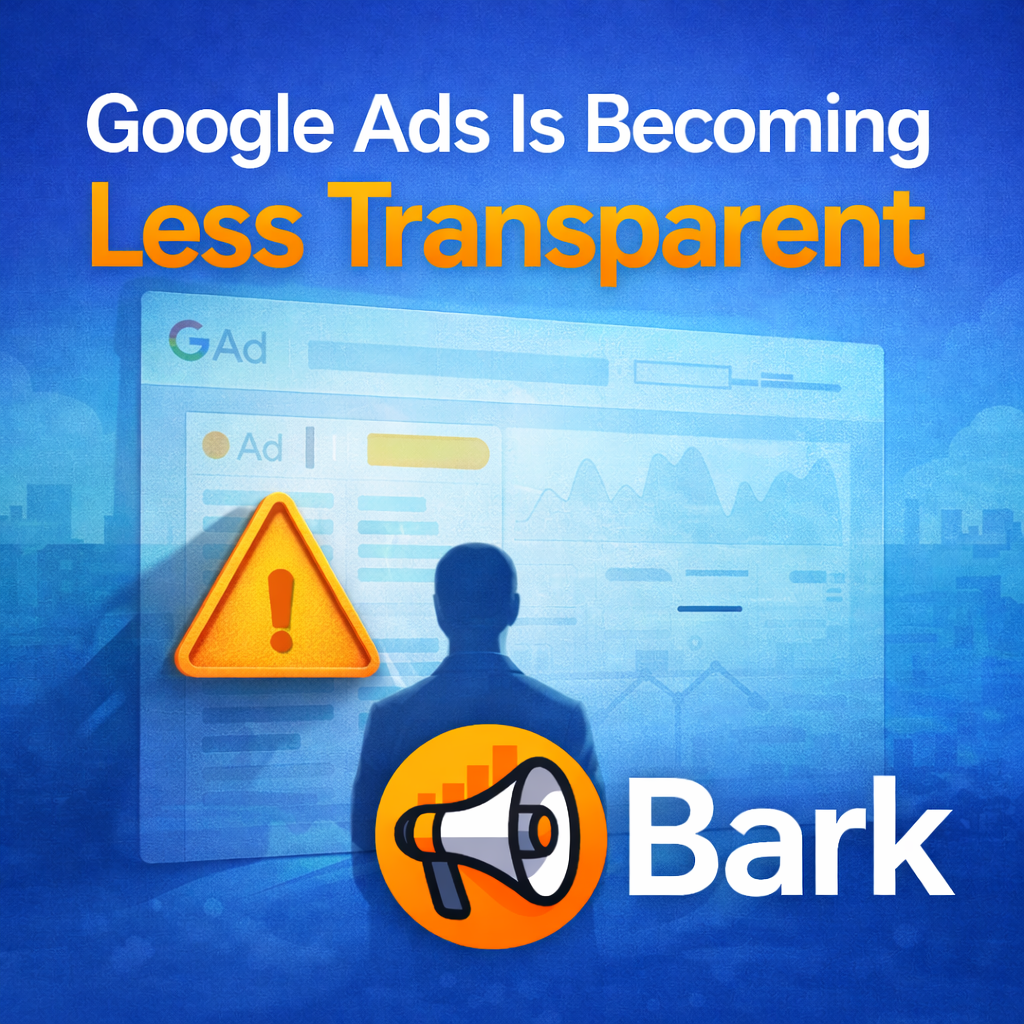
Google Ads Is Becoming Less Transparent — And Most Advertisers Aren’t Ready for It
There’s a quiet shift happening inside Google Ads, and it’s catching most advertisers off guard.
Less visibility.
Less control.
More automation.
On the surface, everything looks fine. Campaigns are running. Spend is going out. Leads are coming in. But underneath, the way advertisers understand where their money actually goes is changing — and not in their favour.
This isn’t about panic. It’s about awareness. Because if you don’t adapt to this shift, you don’t lose performance overnight — you slowly lose control, and that’s far more dangerous.
Transparency Isn’t Being Removed — It’s Being Abstracted
Google hasn’t turned off reporting completely. Instead, it’s abstracted it.
Search terms are harder to access.
Placement data is less granular.
Performance Max blends channels together.
Audience insights are summarised, not exposed.
This creates a problem: advertisers still see results, but they no longer see mechanics.
And when you don’t see the mechanics, you can’t diagnose waste.
Performance Max Is the Best Example of This Shift
Performance Max is powerful. There’s no denying it. It reaches across Search, Display, YouTube, Discover, Gmail and Shopping in one campaign.
But it also represents Google’s new direction clearly:
• Fewer levers
• Fewer insights
• More reliance on algorithms
• Less direct visibility
Many advertisers run Performance Max and genuinely don’t know:
• Which channels are driving spend
• Which queries are triggering ads
• Whether Display is carrying Search
• Whether YouTube is draining budget
• Whether brand traffic is inflating results
That’s not optimisation. That’s trust without verification.
Why This Is a Problem for Advertisers
When transparency drops, waste increases quietly.
Not because Google is malicious — but because automation fills gaps when humans stop asking questions.
Without proper systems:
• Irrelevant traffic blends into averages
• Poor placements hide behind conversions
• Low-quality volume masks inefficiency
• Budget drift becomes normalised
• Decision-making becomes reactive
Most advertisers don’t notice this until costs rise and performance stalls. By then, the damage is already done.
Automation Isn’t the Enemy — Blind Automation Is
This is the key distinction most people miss.
Automation itself is not bad. In fact, it’s necessary. But automation without external control creates dependency. You stop managing campaigns and start hoping they behave.
The winning advertisers don’t fight automation — they wrap control systems around it.
That means:
• Monitoring spend distribution, not just totals
• Watching performance patterns, not just ROAS
• Flagging anomalies early
• Auditing traffic quality continuously
• Questioning “why” instead of accepting “it works”
The New Skill in PPC: Interpreting Signals, Not Reports
As reporting becomes less explicit, PPC management shifts from reading tables to interpreting signals.
Instead of asking:
“Which keyword drove this lead?”
You must ask:
“Why did performance change this week?”
Instead of looking for exact placements, you watch:
• Spend velocity
• Channel weighting
• Conversion quality
• CPC behaviour
• Pattern deviation
This is where many agencies fall behind. They rely on visibility that no longer exists — and they don’t replace it with smarter monitoring.
Control Now Comes From Systems, Not Dashboards
You can’t rely on Google’s UI alone anymore.
Modern PPC control comes from:
• external monitoring
• automated alerts
• budget pacing rules
• performance thresholds
• traffic quality detection
• anomaly spotting
In other words: systems.
Advertisers who build systems maintain control. Those who don’t are slowly blindfolded — even while results look “okay”.
Why Most Advertisers Won’t Adapt in Time
Here’s the uncomfortable truth: most advertisers won’t change their approach until something breaks.
They’ll continue:
• trusting platform automation completely
• scaling without understanding drivers
• reacting instead of preventing
• assuming “Google knows best”
• accepting rising costs as normal
By the time they realise transparency is gone, they’ve already lost the ability to steer.
How Bark Approaches This Shift
At Bark PPC, we assume transparency will continue to decline, not improve.
So we don’t depend on platform visibility.
Instead, we:
• build AI-driven monitoring around campaigns
• track performance behaviour, not just metrics
• detect waste through patterns, not reports
• protect budgets with automated controls
• use experienced strategists to interpret signals
This allows us to run Google Ads effectively even as visibility decreases — because control doesn’t come from the interface anymore. It comes from the system around it.
The Bottom Line
Google Ads is not becoming worse. It’s becoming different.
Advertisers who expect the old level of transparency will struggle. Advertisers who adapt — by building control systems and interpreting signals — will continue to win.
The future of PPC isn’t about seeing everything.
It’s about knowing what matters.
And those who master that won’t just survive automation — they’ll benefit from it.
Join the Smarter PPC Movement
This is Bark - where intelligent AI meets seasoned strategy, built to elevate your campaigns and amplify your impact. Ready to say goodbye to bloated agency processes and hello to effective, affordable advertising? Let’s talk.
Smarter ads. Better leads. Lower costs. Welcome to Bark.


