ChatGPT Ads Are Probably Coming — But Advertisers Shouldn’t Get Too Excited Yet
"People currently trust ChatGPT because it feels useful and relatively neutral. The moment ads enter the equation, that relationship changes."
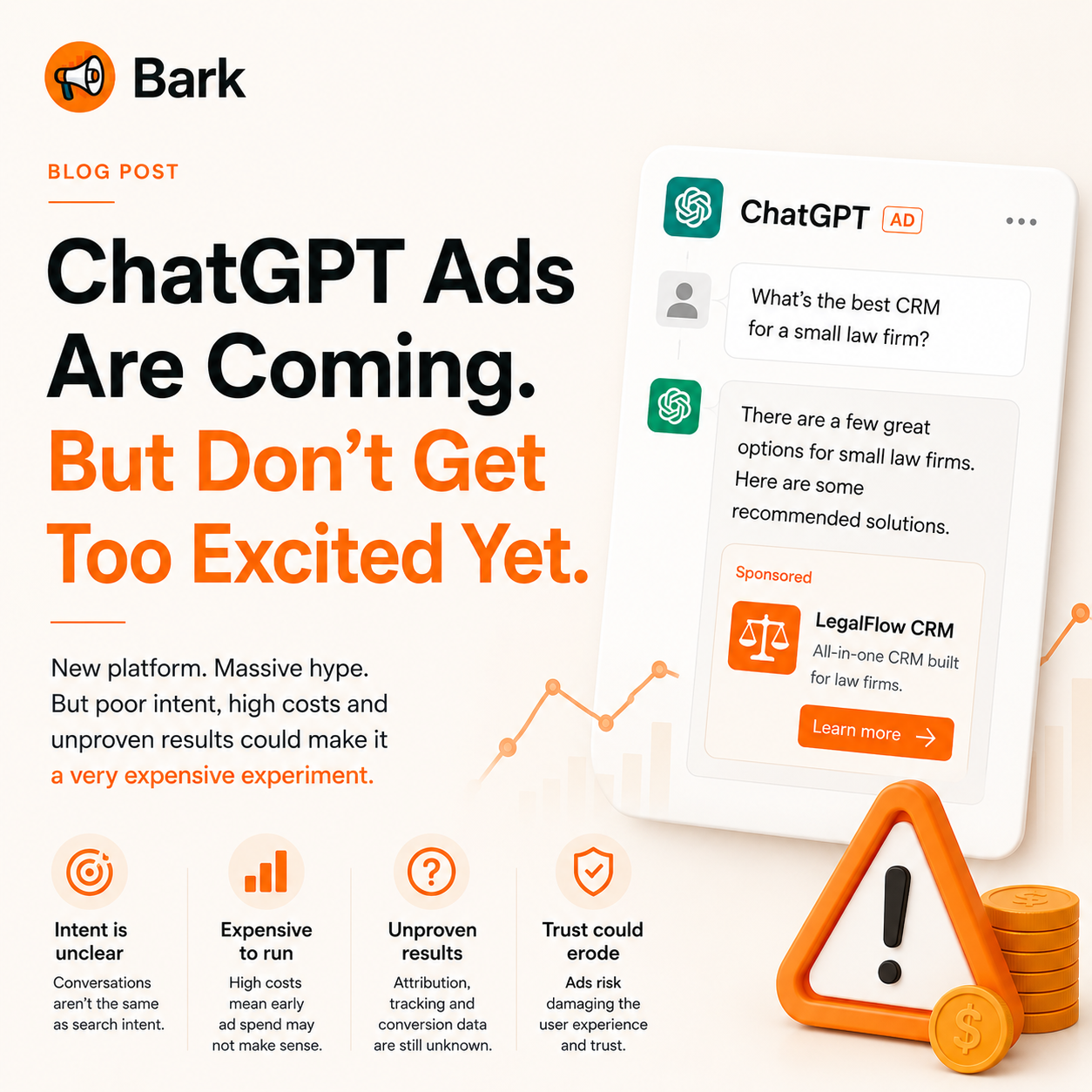
ChatGPT advertising will generate a huge amount of hype over the next few years. Some businesses will find success with it. Many will probably waste money experimenting before the systems mature properly.
Search Intent Is Much Harder Than People Think
Google Ads works because intent is explicit.
Someone searches:
“emergency plumber near me”
You know what they want.
You know roughly where they are in the buying cycle.
You know they need something now.
That clarity is what makes paid search so powerful.
ChatGPT doesn’t work like that.
Most prompts are exploratory, conversational, or informational. Users aren’t necessarily trying to buy anything. They’re asking questions, brainstorming ideas, comparing thoughts, or simply talking.
That creates a massive targeting problem.
If somebody asks:
“What’s the best way to improve my sleep?”
What exactly is the ad?
A mattress?
Magnesium supplements?
A therapist?
A sleep tracker?
Blackout curtains?
Intent becomes blurred very quickly.
And blurred intent is where advertising efficiency dies.
The Economics Probably Won’t Make Sense Initially
This is the part nobody on LinkedIn talks about.
Running AI systems is expensive.
Far more expensive than serving a traditional search result page.
Every query processed through large language models costs real compute power. That means any advertising model layered on top has to justify itself economically — both for the platform and the advertiser.
The likely outcome?
High CPMs.
Aggressive monetisation.
Limited inventory.
And advertisers rushing in simply because it’s new.
That combination usually produces one thing:
very expensive experimentation.
Most Businesses Will Try It Anyway
And honestly, they probably should.
New platforms are always worth testing early. Attention shifts matter. There will absolutely be businesses that find success with ChatGPT advertising eventually.
But most advertisers are going to approach it with unrealistic expectations.
They’ll assume:
AI users are higher intent
conversational ads convert better
targeting will be smarter automatically
the platform will outperform traditional search
In reality, early-stage ad platforms are usually chaotic.
We’ve seen this pattern repeatedly across digital advertising history.
The first wave of advertisers often funds the learning process for everyone else.
Why Google and Meta Are Still Dangerous Competitors
People also forget something important:
Google and Meta are not stupid.
These companies have spent decades refining:
targeting systems
attribution models
auction dynamics
behavioural data
conversion optimisation
Advertising is their entire business model.
OpenAI entering the space doesn’t suddenly erase that advantage.
In fact, Google’s own AI-driven search future may end up being more commercially effective simply because Google already owns the intent layer advertisers care about most.
The infrastructure behind modern ads platforms is incredibly difficult to replicate.
The Bigger Problem: Ads Could Ruin the Product
This is where things get really interesting.
People currently trust ChatGPT because it feels useful and relatively neutral. The moment ads enter the equation, that relationship changes.
Users will start questioning:
whether recommendations are organic
whether responses are commercially influenced
whether certain brands are being prioritised
That tension matters.
Traditional search users already expect ads. Conversational AI users don’t necessarily think that way yet.
Poor ad integration could damage the product experience surprisingly quickly.
What Smart Advertisers Will Actually Do
The businesses that benefit most from ChatGPT Ads probably won’t be the ones throwing huge budgets at it immediately.
They’ll be the ones testing carefully.
Watching:
user behaviour
conversion quality
attribution reliability
intent signals
real business outcomes
Not vanity metrics.
Because this is the same mistake advertisers make on every new platform:
they confuse attention with intent.
Those are not the same thing.
The Bark Perspective
At Bark, we’ll absolutely test new advertising channels when they make sense.
But we’re far more interested in whether something drives profitable intent than whether it sounds futuristic.
New platforms are exciting.
Efficient platforms are valuable.
Those are very different things.
ChatGPT advertising will generate a huge amount of hype over the next few years. Some businesses will find success with it. Many will probably waste money experimenting before the systems mature properly.
That’s normal.
The important thing is staying grounded enough to separate genuine opportunity from novelty.
Because “new” has never automatically meant “better” in advertising.
And it probably won’t start now.


